
THE IMPORTANCE OF THE CURRICULUM IN THE WORLD OF EDUCATION
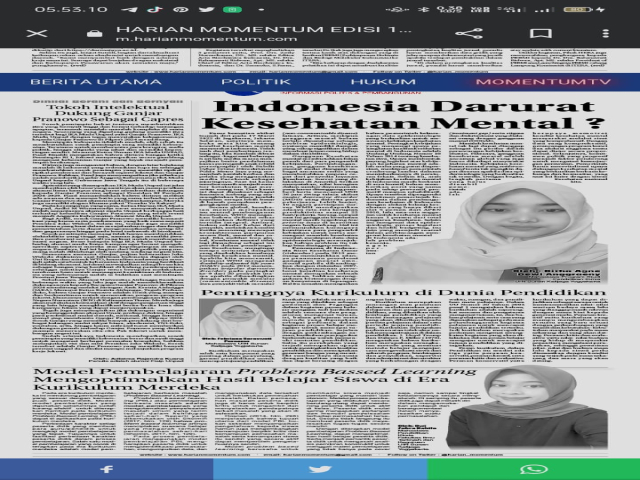
The curriculum is one of the important components in the implementation of education to achieve educational goals. The curriculum is a plan that serves as a guide or reference in the teaching and learning process. In other words, the curriculum is the plan and arrangement concerning the objectives, content, and learning materials as well as the methods used, as a guide in the teaching and learning process to achieve educational goals. In line with the development of the times, the curriculum has also developed to meet the demands of education. In addition, the changes that occur are an effort to improve the quality of education and to create a generation of the nation with human resources of good quality who can compete with other countries
The curriculum is a design or guide for carrying out learning and educational programs, provided by an educational institution, containing the design of the lessons to be given to learners within one period of an educational level. The curriculum is a guideline or benchmark for achieving goals in education. J. Lloyd Trump and Delmas F. Miller (1973) said that the curriculum is a series of methods that includes teaching and learning methods, ways of evaluating students and the whole program, guidance and counselling, supervision and administration, and structures related to time, space, and the selection of subjects. In Law Number 20 of 2003, Article 1 states that the curriculum is a set of plans and arrangements concerning the objectives, content, and learning materials as well as the methods used as a guide for implementing learning activities to achieve certain educational goals. So the curriculum is a guide to a series of activities that will be carried out in the teaching and learning process to achieve the desired educational goals.
The role of the curriculum in education itself has three parts: the conservative role, the creative role, and the critical and evaluative role. The conservative role is that the curriculum can be used as a means of transmitting the values of the cultural heritage of the past that are still considered relevant today to the younger generation. The creative role is that the curriculum is able to develop something new in line with developments that occur and the needs of society now and in the future. The critical and evaluative role is that the cultural values living in society are constantly changing, so the passing on of past values and culture to students needs to be adapted to the conditions of the present and the future.
http://m.harianmomentum.com/read/47813/harian-momentum-edisi-13-juni-2023
Comments (0)
No comments yet.