
Stop Sexual Harassment!
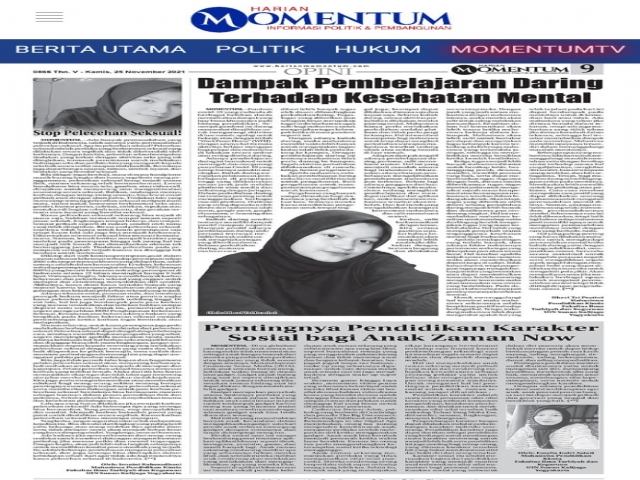
Stop Sexual Harassment!
There are many problems in Indonesia, one of which is sexual harassment. What is sexual harassment? Sexual harassment is behaviour with sexual connotations that is carried out unilaterally and is unwanted by the victim. In other words, sexual harassment is an act related to unwanted sexual activity, including requests for sex and other behaviour leading to sex, whether verbal or physical. It can also take the form of words, writing, symbols, gestures, and actions of a sexual nature.
Looking back, in the days when mobile phones were still rare and used by only a handful of people, sexual harassment often occurred physically, but it has now been transformed. Through mobile phones it can happen via text, images, or video calls, aimed at attacking or intimidating someone sexually. There are even invitations that lure victims with promises of something, sent through personal email or fake accounts. Other acts that count as sexual harassment include flirtatious glances, catcalls, comments with sexual or gender connotations, pornographic jokes, pinching, poking, patting or touching certain parts of the body, and certain movements or gestures of a sexual nature.
Cases of sexual harassment can now occur anywhere, including public places such as markets, schools, and workplaces, and private places such as one's own home, by unwanted guests. When talking about sexual harassment, it is in fact not only women who can be victims; men can be too, because sexual orientation can be fluid. However, gentleness is a trait attached to women, so it often becomes a weak point that is exploited by irresponsible individuals. Harassment of women often happens because they are considered powerless to fight back.
Quoting the website komnasperempuan.go.id, in the 2020 annual record of violence against women there were four special findings, one of which was that over a period of 12 years, violence against women increased by 792% (almost 800%), meaning that violence against women in Indonesia over 12 years increased almost eightfold. Even so, the fact is that many victims of violence and sexual harassment are still reluctant to report and tend to blame themselves. As a result, more and more cases keep emerging because of a lack of understanding and handling of the sexual harassment incidents that occur.
Social pressure, feelings of shame, and weak law enforcement are factors or triggers that keep the number of sexual harassment cases relatively high. On the other hand, this also affects victims, who feel cornered and pressured, even to the point of depression and stress. For this reason, the government needs to pass the Bill on the Elimination of Sexual Violence promptly. The awareness that there is not yet a law that sides with victims of sexual violence becomes a consideration when victims want to take action or report.
Besides that, women also need to do various things to avoid sexual harassment. Sexual harassment can be prevented in several ways, for example choosing a healthy social circle, leaving immediately if one senses signs that sex-related matters are treated as jokes and regarded as normal in an environment, not responding to a harasser in the same way and preferably reporting it to the authorities, and seeking and asking for protection from others who can deal with the harasser.
We also never know when and how a harasser will attack a victim. So try to always be alert wherever and whenever. Harassers usually target victims who look weak. Therefore we must show a firm and fearless attitude to cut off their evil intentions in committing a crime. We also need to inform or educate the people around us about how important it is to prevent sexual harassment, and to give support to victims of sexual harassment in various forms as help in their physical and psychological recovery. This is because harassment can cause trauma and affect psychological health.
So what should be done if one becomes a victim of sexual harassment? Here are some tips that we hope will be useful. First, stop blaming yourself. Being a victim is not a position that deserves to be blamed unilaterally, because sexual harassment can befall anyone.
Second, do not hesitate or be afraid to report the incident. You can start from the smallest circle, namely family or the closest people, because staying silent and not reporting will instead become a heavy burden that you must carry alone. Third, seek help.
It is a good idea to seek help from the closest people for support, or the help of a psychologist if you feel mentally and psychologically disturbed. That way, you will know the next steps to restore your condition after the incident. That concludes some discussion on sexual harassment, and we hope it can be applied in daily life so that no more cases of sexual harassment arise in Indonesia.
Comments (0)
No comments yet.